Saturday, 18 July 2015

Well Known Charismatic Christian Leaders: Dr Martyn Lloyd Jones on Joy in the Holy Spirit

Older Evangelicals Christians in Britain will need no introduction to Dr Martyn Lloyd Jones.  Originating from South Wales, following Campbell Morgan at Westminster Chapel in London, he was arguably the most influential Christian leader in the 20th Century.

Not only did he write numerous books, for example:
  • A 12 Volume commentry on Romans
  • A 5 Volume commentry on 1John
  • A 2 Volume commentry on the Sermon on the Mount
  • 'Preaching and Preachers', possibly his most influential book
More than this, however, he founded the Publishers 'Banner of Truth'.

A far more adequate introduction can be read in his Wikipedia entry or the introduction in the MLJ Trust website which includes some videos.

His credentials as a preacher from the Reformed tradition who had an uncompromisingly high view of scripture and a great legacythrough his teaching and writing are there for all to see.

I want to mention a few things now in relation to his views on issues of interest to Charismatics.

1. Between the years 1955 and 1968, Lloyd Jones taught through the Book of Romans.  Spanning Chapters 1 to 14, there are 366 sermons on the Epistle.  Due to an illness from which he retired from pastoral ministry, he only reached as far as Chapter 14:17.  I will follow with the Doctor's own words on this:

There is another thing to be said, and I am more concerned about this at present.  The interruption of my ministry had a message for me.  I was at Romans 14:17.  I had dealt with ‘righteousness’, with ‘peace’ on March 1st, and there I was stopped.  I was not allowed to deal with ‘joy in the Holy Ghost’.  I have the feeling that this was not accidental.  God intervened and I could suggest a reason why.  I was able to deal with righteousness and peace (I had fleeting experiences of it), but the third thing is the profoundest of all.  Why was I not allowed to deal with it?  Because I knew something, but not enough about it.  ‘I want you to speak with greater authority on this,’ God said.

"Here is what I would put before you.  For six months, until September, I did not preach at all.  For four months I have had the most valuable experience of being a listener.  My general impression is that most of our services are terribly depressing!  I am amazed people still go to church; most who go are female and over the age of forty.  The note missing is ‘joy in the Holy Ghost’.  There is nothing in these services to make a stranger feel that he is missing something by not being there.  It is as though there is a weight upon us and the minister, feeling this, thinks he must be short.  So the people come together in order to depart!  Speaking generally, I think it is true to say this and there is little difference in this respect in evangelical churches.
It is a great thing to be a listener.  You want something for your soul.  You want help.  I don’t want a ‘great sermon’.  I want to feel the presence of the God I am worshipping and to know that I am considering some great and glorious subject.  If I do get this, I do not care how poor the sermon is.
I suggest to you that our greatest danger is professionalism.  We do not stop sufficiently frequently to ask, ‘What are we really doing?’  There is the danger of just facing a text and treating it as an end in itself with a strange detachment.  It is all intellectual.  Nor should our preaching be just emotional, or only to the conscience.  Far too often it is one or other of these things.  There is no life, no power!  We of all people ought to have it.  Joy and power are intimately related.  One without the other is spurious."

So there we have it.  Britain's foremost Reformed Evangelical leader of the last century admits that there is a lackof joy in the Holy Spirit in his own life and in the churches.  To me, this is an incredible admission.

He later dealt with the subject of joy in the Holy Spirit in his book 'Joy Unspeakable', published posthumously in 1984.

I need to say here that he did not share the Pentecostal understanding of the Baptism of the Holy Spirit.  He put his views into a more objective and Calvinistic framework.  However, he did say that the Baptism in the Holy Spirit is a separate experience from conversion and is something that the church needs in order to experience revival.

I am going to finish here with some fascinating thoughts by John Piper on Lloyd Jones.  If you enjoyed reading this blog post, the following is solid gold, a treat to read, but better still if you listen to the audio version at the top of the page.

I have more to say on Doctor Martyn Lloyd Jones, but I will leave this until next time.

Friday, 26 June 2015

Well known charismatic Christian Leaders: JN Darby on the Continuance of Gifts of the Spirit

The man who led me to Christ was from a Brethren background.

The first missionaries I regularly supported in prayer were from the Brethren.


An old Scottish ex-missionary to India who greeted me every week in my church for many years was from the Brethren.


Some of the most effective evangelists I know in the North East, a couple of whom I count as friends, are from the Christian Brethren.


I have a great respect for these people.  My brothers in Christ, for sure, but I am talking about the Brethren - a loosely linked group of churches with no full time pastors.  Some are more 'exclusive' than others.  They're unfashionable.  Their women still cover their heads in worship.  Some have a pre-occupation with Bible prophecy.  Some say the're in a kind of 'time warp', old fashioned and quaint perhaps?  Dangerous even?  Embarrassing?  Irrelevant?  Personally, I hold these people in high esteem.


How do you get to meet these people?  That's a tricky one.  So here's a guide.  Let's start with the easy bit.


How not to find the Brethren

1. Go to pastors' conferences
2. Go to the local 'Churches Together' meeting in town
3. Go to big conferences like Spring Harvest
4. Wait until they invite you to speak at their churches
5. Go to anything 'charismatic'
6. Visit the grandiose church buildings in your town

How to find the Brethren

1. Get involved in open air evangelism

The above will explain why so few Christians in our mainline churches will ever meet them.  These people keep themselves to themselves.  They do not have a high view of the established church.  Generally, they will not mix on any formal level with other groups of Christians.  They have no paid ministers.  But they do preach the gospel and hand out tracts.  In many towns, they are the only ones left who are really reaching large numbers of unchurched people.  Some have a rather dated or condemning method.  But rather than criticise, we need to get out on the streets as much as they do, and improve on their methods.


If you go to one of their meetings in a traditional Assembly, you will find the men taking it in turns to stand up and introduce hymns, spiritual insights, scriptures and prayers.  Someone will then preach a relatively short prepared sermon towards the end of the meeting.  The women do not publicly contribute.


When I first went to one of these meetings, I found it extraordinary.  In a sense, this was the closest thing I had ever seen to New Testament Christianity.  It came right out of the 1Corinthians 14 textbook:


What then, brothers? When you come together, each one has a hymn, a lesson, a revelation, a tongue, or an interpretation. Let all things be done for building up. 1 Corinthians 14:26

But there was one thing missing.  Gifts of the Spirit!  I would have expected charismata to thrive in this type of meeting, yet they were... forbidden!


Why?  Did their founder believe that such things had 'died out'?  What was the view of their founder, John Nelson Darby?

Get this.  John Nelson Darby, the founder of the Brethren, believed passionately in the charismatic gifts of the Spirit.  It is easy to find his collected writings on the internet.  He has written articles entitled,


ON THE PRESENCE AND ACTION OF THE HOLY GHOST IN THE CHURCH

CHAPTER 1

ON THE INTRODUCTION OF MR. WOLFF’S PAMPHLET; IN WHICH, WHILE DENYING THE CONTINUANCE OF GIFTS, HE ASSERTS HIS INTENTION OF DEFENDING MINISTRY FROM THE ATTACKS DIRECTED AGAINST IT…

CHAPTER 16


ON MR. WOLFF’S CHAPTER 16, WHERE THE WRITER PRETENDS TO PROVE, BY TWENTY-FIVE REASONS, THAT THE GIFTS OF THE HOLY GHOST HAVE ALL CEASED

The above is a lengthy rebuttal of a prominent church leader who believed that such things had ceased.  Here's a quote from Darby's response:

Are we really come to this, that those who think they are pillars of the church give their approval to that which denies the presence of the Comforter, and while denying it, seeks to persuade us that the church enjoys ‘all the primitive blessings’?  The gifts were only ‘the manifestation of the Spirit.’  How much have we lost in this respect, alas is but too evident!  All that was, under the apostolic administration, a public sign of the presence of the Holy Ghost to the world… all this is lost.

In another article, entitled:

OPERATIONS OF THE SPIRIT OF GOD

Darby writes:

This leads us to see the blessing and importance of these gifts, definitely committed by Christ, as He sees good in grace, for the good and communication of His blessed fullness to the Church; whereby, fed with what is good, it should be preserved and guarded against hankering after the trash of deceivers.  They are gifts to the Church, not to all but for all.  The development of these in full liberty and openness of ministry is most important.  Not can they be really or rightly developed otherwise.

So why have such things been forbidden from their meetings?

Well, according to David Pawson's book, 'Word and Spirit togeher, when these new assemblies first met together, a frequent result was... other languages and healing.  At that time, the leaders of the movement met to decide what to do about this.  And they took the cautious - some would say cowardly - approach.  They forbade the gifts.  Because the movement was already facing opposition from its detractors, they felt that continuing with charismatic gifts was a radical step too far.  And they forbid them to this day.  The precise opposite of Darby's original intention!


The first Brethren Assemblies were charismatic!

Monday, 8 June 2015

Well Known Charismatic Christian Leaders: John Piper on Gifts, Spiritual Warfare and the Prayer of Faith

John Piper is a well known Christian Leader in the United States.  Most of my American friends who read this will know him better than I do.  My main acquaintance with him is over two things.  Firstly, the superb book he co-wrote and edited with Wayne Grudem, entitled Recovering Biblical Manhood and Womanhood.

Secondly, his very, very comprehensive and high quality website Desiring God.

He is from the Reformed, Calvinistic part of the church.  It is well known, I think, that he believes that gifts are for today.

I include him here, along with the clip below because John Piper has a high view of scripture and is widely regarded as holding 'conservative' views on some issues such as the roles of men and women, the need for book by book teaching, expository teaching, taking care over appointing elders, healthy Christian families and so on.  There is nothing frivolous, flippant, flaky or lightweight about him.  Yet he does not just passively accept that 'charisma' could be from God, he actively and firmly advocates that we should 'earnestly desire the greater gifts'.  I find his approach refreshing.

This clip is, to me, an extraordinary one.  Here he basically talks about the importance of the ministry of the Holy Spirit in world mission.

1. Firstly, he quotes approvingly an uncompromising statement coming out of the second Lausanne conference on World Mission.

 'We therefore call upon all Christians to pray for such a visitation of the sovereign Spirit of God, that all His fruit will appear in all His people and that all His Gifts may enrich the Body of Christ.  Only then will the whole church become a fit instrument in the hands of God, that the whole earth may hear His voice.'

2. Secondly he talks about the use of spiritual warfare in preparing the way for Christian Mission and church planting, using the prayer of faith.  He relates the story of a group of people who had to exercise authority over spiritual powers of evil over an region in Argentina that had been marked by occult activity by a group of witches.  Once they had done this, church planting flourished.  Before they did it, all attempts to start new churches had failed.

3. Thirdly, he talks about how his father had on occasion had to wrestle with God in prayer and get to a point of praying in faith and authority before seeing evangelistic results.

The second account is an interesting to me.  He refers to spiritual oppression over a particular geographical area and the need to deal with this.  This is something I would have rejected as nonsense not too long ago.

See what you think.


Saturday, 30 May 2015

Well known Charismatic Christian Leaders: Charles Spurgeon's ministry of Words of Knowledge and Healing

The next few posts are aimed at my cessationist brethren.  A cessationist, remember, is someone who believes that gifts of the Spirit such as prophecy, other languages, physical healing, are not for today.  They were only for the times of the early apostles and those who seek these things are in error.

So (through these slightly provocative titles) I will begin by showing how well known leaders admired by cessationists exercised gifts of the Spirit of various kinds.

I used to dislike Charles Spurgeon.  My antagonistic feelings began many years ago, when a good friend of mine joined a reformed evangelical church, very similar to the Ebenezer Reformed Bible Tabernacle in Shieldcastlehope.  My friend began to grow less friendly towards some of my other Christian friends and started picking arguments with people over predestination and freewill.  At the same time, he became an avid student of Charles Spurgeon sermons and biographies.  He told me once that the Pastor of his church had a large poster of Charles Spurgon in his study.  I was unhappy with the direction my friend's spiritual life was going in and to some extent I blamed CHS himself.

This all changed when I began to read some of his sermons, and his book 'Lectures to my Students'.  Hey!  I really like this guy!

So what has been going on here?

I think that people who limit God and in doing so, quench the Spirit, instinctively look for a champion to further their cause.  CH Spurgeon, who was a Calvinist and huge admirer of the Puritans, fits that bill quite well, not least because he had a hugely fruitful and powerful ministry.  He stood against the liberal theologians of his day, warned against emotionalism, he disliked altar calls, he eschewed more superstitious expressions of Christianity and he therefore became a champion of the Reformed faith.

Most books about Spurgeon are written by cessationists and therefore will not say too much about the miraculous elements of his ministry, and he himself downplayed these things.  But I am going to quote now from some biographies of Spurgeon - firstly his own autobiography via this You Tube clip:


Now a quote from 'Spurgeon A New Biography' by Arnold Dallimore (P140).

In view of Spurgeon's own long sickness and that of his wife, it is difficult to believe that many people thought he posessed a "gift of healing".  The best information on this matter is to be found in Russell Conwell's Life of Spurgeon, particularly in his chapter, "Wonderful Healing."
The idea began during the cholera epidemic.  As we saw, Spurgeon visited numerous homes where the disease raged, and there he prayed that the sick one might be made well.  In many instances, in someone who seemed near death the disease was stopped, and before long health returned.  People were sure this was the result of prayer.
During further years Spurgeon prayed for persons in sicknesses of various kinds, and although in many a case there was no betterment, in others there was improvement that appeared miraculous.  Dr Conwell examined several of these experiences and in 1892, the year of Spurgeon's death, he declared:

There are now living and worshipping in the Metropolitan Tabernacle hundreds of people who ascribe the extension of their life to the effect of Mr Spurgeon's personal prayers.  They have been sick with disease and nigh unto death, he has appeared, kneeled by their beds and prayed for recovery.  Immediately the tide of health returned, the fevered pulse became calm, the temperature was reduced, and all the activities of nature resumed their normal functions within a short and unexpected period.  If a meeting were called of all those who attribute their recovery to the prayer of Mr Spurgeon, it would furnish me with one of the most deserved tributes to his memory that could possibly be made.

Conwell goes on to report seven specific instances of what was considered healing in response to Spurgeon's prayers.  "The belief in Mr Spurgeon's healing power became among some classes a positive superstition, and he was obliged to overcome the very false and extravagant expressions... by mentioning the matter from the pulpit, and rebuking the theories of the extremely enthusiastic.  He felt it was becoming too much like the shrines of Catholic Europe."
Spurgeon declared that the subject of divine healing was very much a mystery to him.  He said he prayed about sickness just as he prayed about anything else, and that in some instances God answered with healing, whereas in others, for reasons beyond our understanding, He allowed suffering to continue.


Sunday, 17 May 2015

On Labels: Pre-Augustinian - Grecian 2000

Thanks to Augustine of Hippo and some others, most of the last 2,000 years have seen the church influenced largely from Athens rather than Jerusalem.  Western Christianity is largely a fusion of Greek philosophy and Biblical thinking.

Here are a couple of examples from our British culture.

Our traditional Universities like Durham, St Andrews, Cambridge and Oxford.  Originally built on a collegiate system with Christian foundations, the idea of a 'University' is a Greek one.  Some would argue that the world's first one was founded by Plato in Athens.

Our school system has an uncanny resemblance to the system of state education described in Plato's Republic.  Children were to be given guardians and separated from their fathers and mothers and taught reading, mathematics, music and physical education from the age of six.  In Hebrew thinking, children were taught in their local community, either in the home or at the local synagogue.  You could argue that a Christian School or a 'Faith School' is a fusion of Biblical and Greek thinking.

I am now going to give you a list of differences between a Greek and a Hebrew thinker.  Which one are you?

Greek Thinkers Hebrew Thinkers
Separate the physical from the spiritual.  Hence, baptism and communion are empty symbols with no spiritual consequence. Integrate the physical from the spiritual.  Hence, as in 1Corinthians 11, some people died by taking the Lord's Supper for the wrong reasons.  In 1Kings 13, Naaman was healed by being 'baptised' seven times in the River Jordan.

Separate clergy (priests, vicars, pastors,
ministers) from the laity using academic degrees, titles etc.
See us as a royal priesthood.  Brothers and sisters.

Send children away from the family into academic institutions with qualified teachers and age segregated classes
Teach from father and mother to son and daughter.

Teach through catechisms and systematic theologies
Teach through parables, stories.

Teach by lecturing an audience through wisdom and oratory
Teach by the power of the Holy Spirit, interacting with an audience
Teach that a disembodied soul goes to a spiritual heaven Teach the resurrection of the dead, the existence of a new body and a new heaven and a new earth

Read the Bible allegorically, looking for the spiritual meaning behind narratives

Read the Bible literally, noting people and places in their most straightforward meaning

See the church as the 'new' Israel

Differentiate Israel and the Church
Limit musical worship to standing up and singing
Extend musical worship to clapping, kneeling, shouting, silence, dancing and other physical expression

Value family and community
Value institutions

Separate 'Christian' service (pastors, evangelists, missionaries) to 'secular' service, like teaching, manual trades, medical professions.
See all work as sacred.

See God as perfect, but impersonal.  Don't expect God to speak through visions, prophecy or other forms of revelation
Listen to God as well as speak to Him in Prayer

Think in terms of social democracy, state power
Think in terms of Kingdom

I want to put it to you that we need to rid ourselves of the Greek thinking and go back to a more Hebrew mindset if we are to recover the power of the early church.  We need the church to be pre-Augustinian.

For a fuller explanation of what I have written here, may I recommend David Pawson's talks on De-Greecing the church.


Thursday, 30 April 2015

Election Special: How I am going to vote

I hate to disappoint you, but I'm not going to tell you where I'm going to put that cross.  I haven't even 100% decided myself.  But in case it helps anyone else, this is how I am coming to a decision.

1.  Attempt to meet all of the main candidates.  There are six standing where I live.  There is an independent but I have failed to find any of his details, not even an email address.  And I can't really take the Greens seriously, with copious apologies and all due respect, I couldn't vote for anyone who will legalise hard drugs, membership of terrorist groups, abortion, brothels and all forms of pornography.  So I emailed the other four as soon as I could, asking to meet each of them personally and ask them a few questions.

2.  Work out beforehand what are the 'red lines'.  For me, the biggest issue is abortion.  Personally, I believe it is just about the most grave, serious wrong we do as a society.  So if any of the candidates are prepared to say they oppose abortion, I will probably vote for them, regardless of their party allegiance.  Freedom of speech is another 'biggy' for me.  Even though some people can be very annoying (yes, even some street preachers!), any outlawing of public discourse short of incitement to violence is a serious problem for me.

3.  Draw up a list of questions to ask each candidate.  Each candidate should be asked the same questions in a neutral way without, if possible, giving away my views.  I had six questions including the two issues mentioned above.

4.  Look them in the eye and ask them the questions.  I received two replies to my emails.  The incumbent MP did not reply, but I have her voting record in the House of Commons to guide me in what her answers would be.  Another candidate I wrote to twice but never received any response.  So I was at least able to interview two of them.  Better than nothing!  And it was helpful to meet them personally, too.  The one I agreed with the most admitted to being an atheist.  The other has something of a Christian background even though I was less happy with some of their answers.  Meeting them personally was helpful, though.

5.  Be prepared for the next five years.  I am neither a betting man nor a prophet.  But I suspect we are in for a rough ride over the next five years, both the UK as a whole and the Christian church in particular.  I think it will be some kind of alliance, formal or informal, between Labour and the SNP.  And I think some sincere Christians will end up in prison for their faith.  In a way, that doesn't worry me.  Brave Christians who are prepared to suffer for the Gospel will be instrumental in turning people to Christ.  People are only going to get more disillusioned with politics and more open to the Gospel, so lets pray for boldness and seek a harvest, greater than we have seen for some time.

6.  Remember that politics is not the answer.  The Gospel of the Kingdom of God is!  Nobody is going to legislate for revival.  And Christianity is designed to thrive in hostile environments.  Christ's rule is for the future, not now.  Politics is about what other people should do, mostly.  We should be seeking God for what we should do.

Two scriptures to finish:

 If my people who are called by my name humble themselves, and pray and seek my face and turn from their wicked ways, then I will hear from heaven and will forgive their sin and heal their land. 

2Chronicles 7:14

 The Lord brings the counsel of the nations to nothing;
he frustrates the plans of the peoples.
  The counsel of the Lord stands forever,
he plans of his heart to all generations.
  Blessed is the nation whose God is the Lord,
the people whom he has chosen as his heritage!

Psalm 33:10-12

Sunday, 19 April 2015

On Labels: Pre-Augustinian

I am now going to invent a term.

Pre-Augustinian

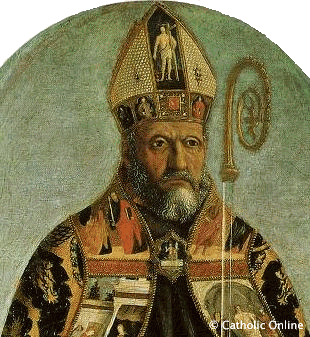
I want to suggest to you that Augustine of Hippo, St Augustine the Bishop of Hippo, has caused more damage to the Christian cause than almost anyone else in history.


Why single out this man?

Here are my reasons:

  1. He is very influential on the teaching of the church – both Catholic and Protestant.  To the Catholics, he is their most important theologian.  And he is hugely important to Protestants too!  Calvin’s system of theology is largely drawn from Augustine’s teaching.  In his ‘Institutes’ he is quoted over 400 times.  Martin Luther (originally an Augustinian monk) studied and quoted Augustine more extensively than any other non-Biblical figure in his lifetime.
  2. Augustine taught that Christian heretics should be physically attacked and persecuted.  Because of the churches privileged position, it was able to use secular political powers to use drowning, burning and a host of tortures on those whom the church regarded as heretics over many centuries.  Augustine was frequently cited as an authority for doing this.  In addition, he advocated the use of force to make people attend church.  And Reformed brethren cannot point the finger here.  Protestant leaders presided over these activities as well as Catholic.  Lord, please forgive us!
  3. Much of Augustine’s teaching was thoroughly what we would regard as Roman Catholic.  Examples would be:
  • Prayers for the dead
  • Exaltation of Mary
  • Baptismal regeneration
  • Infant baptism.  Hence it was taught that a baptised baby goes to heaven and an un-baptised baby who dies goes to hell
  • The superiority of singleness.  All sex, including within marriage, is sinful.
  1. Finally, Augustine followed some of his predecessors in merging Greek philosophy (particularly that of Plato in his case) with Christian theology.  The effect of this, among other things, is to separate the physical from the spiritual.  I will list some of the effects of this in the next section, but in essence, the mindset of the average Western Christian is heavily influenced by Greek philosophy.
I believe that the Reformation served to correct some serious errors in the church.  And yet, it did not go far enough.  Many groups of true believers over the years, who have sought to return to a simpler, more biblical model of Christianity, dating from long before Augustine was on the scene, have been heavily persecuted by the state church, including the Reformed part of it.

By the time Augustine was on the scene, the church had detached itself from much of the simple Christianity that thrived in its early years and had picked up a great deal of 'baggage' in its teaching and practice.

It is significant that following Augustine's time we had the 'dark ages' in which little history is recorded, but it is a time of cultural and economic backwardness.  Most people in Christendom were poorly educated.  Groups of Christians that tried to exist outside of church structures were heavily persecuted.  Yet Jewish communities thrived culturally, economically and educationally.  The biblical principal of maintaining home worship and the tradition of passing on literacy and spiritual knowledge from parents to children was a key here - something that the church had long abandoned.  So the Jews suffered their own dose of persecution from a jealous church.

What would Jesus say?

'Woe to you, scribes and Pharisees, hypocrites! For you shut the kingdom of heaven in people’s faces. For you neither enter yourselves nor allow those who would enter to go in.'
Matthew 23:13

In order to find a form of Christianity that is more Christlike, we must of course study scripture - that goes without saying.  It helps also to be aware of the false teaching and practise that has developed when the church became a rich and powerful institution.

So the church in its thinking, actions and methods needs to be pre-Augustinian.